

As a supplier of the Q43 - 200 Scrap Metal Shear, one question I'm frequently asked is: "Can the Q43 - 200 Scrap Metal Shear cut stainless steel scrap?" In this blog post, I'll delve into this question and provide you with a comprehensive answer.
Understanding the Q43 - 200 Scrap Metal Shear
Before we discuss whether it can cut stainless steel scrap, let's first understand the Q43 - 200 Scrap Metal Shear. This machine is a powerful piece of equipment designed for cutting various types of metal scrap. It operates based on a hydraulic system, which provides the force needed to shear through metal. The "Q43" series is well - known in the metal recycling industry for its reliability and efficiency. The "200" in the model number usually refers to certain specifications related to its cutting capacity, such as the maximum thickness or the maximum force it can exert.
Properties of Stainless Steel Scrap
Stainless steel is an alloy composed mainly of iron, chromium, and often nickel and other elements. It is known for its corrosion resistance, high strength, and good ductility. These properties make it widely used in various industries, from construction to kitchenware. However, these same properties also pose challenges when it comes to cutting.
The high strength of stainless steel means that it requires more force to cut compared to some other types of metals. For example, mild steel, which is commonly used in many metal recycling operations, has a relatively lower yield strength than stainless steel. The chromium and nickel in stainless steel contribute to its hardness and toughness, making it more difficult to shear.

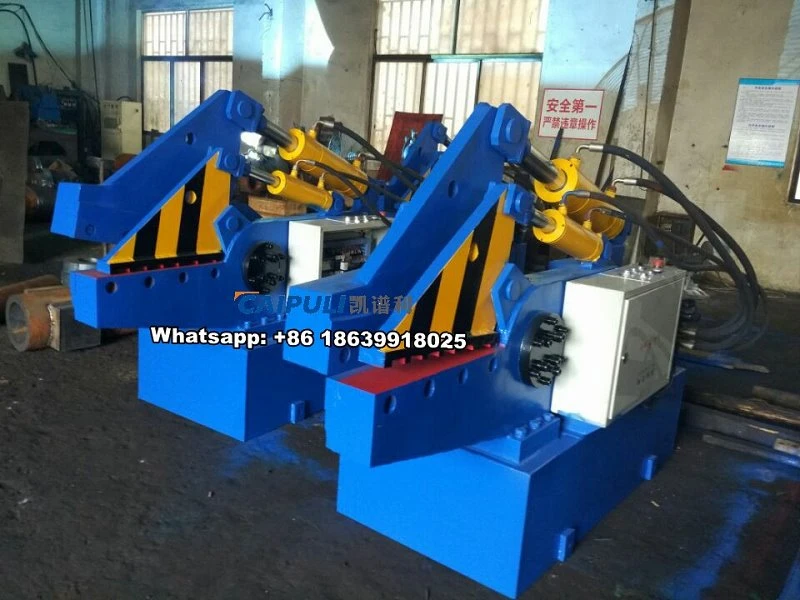
Can the Q43 - 200 Scrap Metal Shear Cut Stainless Steel Scrap?
The answer is yes, but with some limitations. The Q43 - 200 Scrap Metal Shear is capable of cutting stainless steel scrap, but the thickness and type of the stainless steel play crucial roles.
If the stainless steel scrap is relatively thin, say up to a certain thickness that is within the cutting capacity of the Q43 - 200, the shear can handle it quite well. For example, thin sheets of stainless steel used in some decorative applications or small components can be easily cut by the machine. The hydraulic system of the Q43 - 200 can generate sufficient force to break through the material and make a clean cut.
However, when it comes to thicker stainless steel scrap, the situation becomes more complicated. Thicker stainless steel requires more force to shear. If the thickness exceeds the maximum cutting capacity of the Q43 - 200, the machine may struggle to cut it. It could lead to incomplete cuts, damage to the cutting blades, or even overloading of the hydraulic system.
Another factor to consider is the type of stainless steel. Different grades of stainless steel have different mechanical properties. For instance, austenitic stainless steels, which are the most common type, have relatively high ductility. They tend to deform rather than break cleanly when subjected to shear forces. This means that cutting austenitic stainless steel may require more precise control of the cutting process compared to other types.
Factors Affecting the Cutting Performance
Several factors can affect the ability of the Q43 - 200 Scrap Metal Shear to cut stainless steel scrap:
- Cutting Blade Quality: High - quality cutting blades are essential for cutting stainless steel. The blades need to be made of a hard and wear - resistant material to withstand the high forces and the abrasiveness of stainless steel. Dull or low - quality blades will not be able to make clean cuts and may cause problems such as burrs or jagged edges.
- Hydraulic System Pressure: The hydraulic system of the Q43 - 200 provides the force for cutting. Ensuring that the hydraulic system is operating at the correct pressure is crucial. If the pressure is too low, the machine may not be able to cut through the stainless steel. On the other hand, if the pressure is too high, it can cause damage to the machine or the blades.
- Cutting Angle: The cutting angle of the blades can also affect the cutting performance. A proper cutting angle helps to concentrate the force and make a more efficient cut. Incorrect cutting angles can lead to increased resistance and poor cutting results.
Comparison with Other Shears in the Q43 Series
If you find that the Q43 - 200 has limitations when cutting thicker stainless steel scrap, you may consider other models in the Q43 series. For example, the Q43 - 315 Scrap Metal Shear is designed with a higher cutting capacity. It can handle thicker and tougher materials, including thicker stainless steel scrap. This machine is suitable for large - scale metal recycling operations where a higher volume of stainless steel scrap needs to be processed.
The Q43 - 160 Crocodile Metal Shear is also a viable option. Although it has a relatively lower cutting capacity compared to the Q43 - 315, it may still be more powerful than the Q43 - 200 in some cases. It can be a cost - effective solution for medium - sized metal recycling facilities.
For more mobile and flexible operations, the Q43 - 63 Mobile Hydraulic Metal Shear can be considered. While it may not have the same cutting capacity as the larger models, it offers the advantage of portability, which can be useful for on - site cutting of stainless steel scrap.
Conclusion and Call to Action
In conclusion, the Q43 - 200 Scrap Metal Shear can cut stainless steel scrap, but its performance depends on the thickness and type of the stainless steel, as well as other factors such as blade quality and hydraulic system pressure. If you are in the metal recycling industry and have requirements for cutting stainless steel scrap, carefully evaluate your needs. Consider the volume, thickness, and type of stainless steel you will be dealing with.
If you are interested in learning more about the Q43 - 200 Scrap Metal Shear or any other models in our Q43 series, we invite you to contact us for further discussion. Our team of experts can provide you with detailed information, technical specifications, and help you choose the most suitable machine for your specific needs. We look forward to the opportunity to work with you and contribute to the success of your metal recycling business.
References
- ASM Handbook Volume 1: Properties and Selection: Irons, Steels, and High - Performance Alloys
- Metals Handbook Desk Edition, 3rd Edition


