

As a supplier of the Q43 - 160 Crocodile Metal Shear, I've received heaps of questions about its control system, especially the anti - interference design. So, let's dig into it and break down what makes the Q43 - 160's control system so robust against all kinds of interference.
Understanding the Basics of Interference in Metal Shear Control Systems
Before we chat about the anti - interference design of the Q43 - 160, we gotta understand what interference is in metal shear control systems. Interference refers to any unwanted electrical signals that can mess up the normal operation of the control system. There are different types of interference sources. For instance, electromagnetic interference (EMI) can come from nearby electrical equipment, like motors or transformers. These devices generate strong electromagnetic fields that can disrupt the signals in the control system of the metal shear.
Another source is power supply interference. Fluctuations in the power grid, such as voltage spikes or drops, can cause malfunctions in the control system. And then there's also radio - frequency interference (RFI), which can be emitted by wireless devices in the vicinity. All these types of interference can lead to inaccurate control of the metal shear, affecting its performance and even causing safety issues.
The Anti - interference Design of the Q43 - 160 Crocodile Metal Shear's Control System
Shielding and Grounding
One of the key aspects of the anti - interference design of the Q43 - 160 is shielding. The control system components are enclosed in special shielding enclosures. These enclosures are made of materials that can block electromagnetic and radio - frequency interference. For example, the wiring harnesses in the control system are also shielded. The shielding acts as a barrier, preventing external interference signals from reaching the sensitive electronic components inside.
Grounding is equally important. A proper grounding system is established in the Q43 - 160. This helps to divert any unwanted electrical currents caused by interference to the ground. By grounding the control system components, we ensure that the electrical potential remains stable, reducing the risk of interference - related malfunctions.
Filtering Circuits
The Q43 - 160's control system is equipped with filtering circuits. These circuits are designed to remove unwanted frequencies from the electrical signals. For power supply, there are power filters that can suppress voltage spikes and noise. These filters are like bouncers at a club, only allowing the right electrical signals to pass through to the control system components.
In the signal transmission lines, signal filters are used. These filters help to eliminate high - frequency interference that can distort the control signals. This ensures that the control commands sent to the metal shear's actuators, like the hydraulic cylinders, are accurate and free from interference.
Isolation Techniques
Isolation is a crucial anti - interference measure in the Q43 - 160. Optical isolators are used in the control system to separate different electrical circuits. These isolators use light to transfer signals between circuits, which means there is no direct electrical connection. This effectively prevents interference from propagating from one circuit to another.
Transformer isolation is also employed. For example, in the power supply section, transformers are used to isolate the control system from the main power grid. This helps to protect the control system from power - related interference, such as electrical surges.
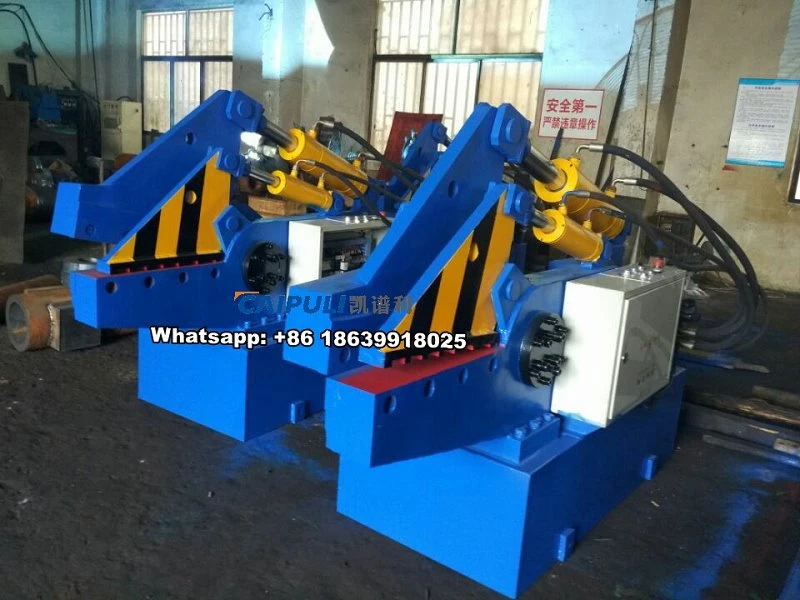

Comparing with Other Models
It's always interesting to see how the Q43 - 160 stacks up against other models. We also offer the Q43 - 63 Mobile Hydraulic Metal Shear and the Q43 - 200 Scrap Metal Shear. While these models also have anti - interference features, the Q43 - 160 has been specifically optimized for heavy - duty applications.
The Q43 - 63 is more of a mobile and lightweight option, suitable for smaller workshops. Its anti - interference design is focused on portability and basic protection. On the other hand, the Q43 - 200 is a high - capacity shear, and its anti - interference design is tailored to handle the large - scale operations and the stronger electromagnetic fields generated by its powerful motors. The Q43 - 160 strikes a balance between the two. It has a more comprehensive anti - interference design compared to the Q43 - 63, while still being more cost - effective and flexible than the Q43 - 200 for medium - sized operations.
Benefits of the Anti - interference Design
The anti - interference design of the Q43 - 160 brings a whole bunch of benefits to our customers. First of all, it ensures the reliability of the metal shear. With a control system that is resistant to interference, the Q43 - 160 can operate smoothly for long periods without unexpected breakdowns. This means less downtime for your business and increased productivity.
Secondly, it improves the accuracy of the metal cutting process. The control signals sent to the actuators are clear and accurate, allowing for precise cutting of metal materials. This results in higher - quality finished products.
Safety is also enhanced. Interference can sometimes cause the metal shear to operate in an unpredictable manner, which poses a serious safety risk to the operators. The anti - interference design of the Q43 - 160 helps to prevent such situations, keeping the workplace safe.
Conclusion and Call to Action
In a nutshell, the anti - interference design of the Q43 - 160 Crocodile Metal Shear is a well - thought - out combination of shielding, filtering, and isolation techniques. It's designed to protect the control system from various types of interference, ensuring reliable, accurate, and safe operation.
If you're in the market for a high - quality metal shear with a robust anti - interference control system, the Q43 - 160 could be the perfect choice for you. Whether you're running a small - scale workshop or a large - scale recycling plant, this machine can meet your needs. Don't hesitate to reach out to us for a detailed discussion about your specific requirements and how the Q43 - 160 can fit into your operations.
References
- Electrical Engineering for Industrial Automation: Principles and Practices
- Handbook of Electromagnetic Compatibility in Industrial Environments


