


One-stop Metal Chips Briquetting Machine Factory in China
For any metalworking shop dealing with turnings, swarf, or chips, a metal briquetting machine is a game-changer. It converts messy, low-value waste into dense, high-value briquettes. But simply owning a machine isn't enough-optimizing it for maximum density and effective oil separation is where the real return on investment happens.
Why Density & Dryness Matter
Higher Density: Means more metal per briquette, maximizing weight and scrap value. Dense briquettes are also stable, reducing shipping costs and reclaiming up to 95% of your floor space.
Effective Oil Separation: Removes up to 90% of cutting fluids, allowing you to reclaim valuable coolant and ensuring briquettes meet stringent scrap yard standards (often requiring <5% oil content) for a higher price tier.
How to Achieve Maximum Briquette Density

Optimize Material Preparation (The Most Critical Step)
The condition of your chips going into the metal chip briquetting chamber is 80% of the battle.
Chip Type & Mix: Know your material. Brittle cast iron chips compact beautifully. Long, stringy "bird's nest" aluminum or steel turnings are the enemy of density.
Pre-Processing is Non-Negotiable:
Use a Crusher/Destroyer: Process long turnings into short, uniform chips. This removes air pockets and allows for even compression. This is the single most effective upgrade for density.
Avoid Contamination: Keep different metals separate. Mixing aluminum and steel chips, for example, ruins both the density and the scrap value.
Consistent Feed: The hopper should be fed with a uniform mix, not in large, irregular clumps.
Master the Machine Settings
Pressure Adjustment: Your metal briquette machine has a hydraulic pressure setting. Higher pressure = higher density, but also more wear. Find the manufacturer's recommended optimum for your specific metal. Don't just max it out.
Cycle Time: Ensure the press head holds at maximum pressure for the full "dwell time" in the cycle. Rushing the cycle releases the briquette before it's fully compressed.
Die & Plunger Condition: Worn dies or plunger heads will never achieve optimal pressure. Inspect for wear, scoring, or damage regularly.
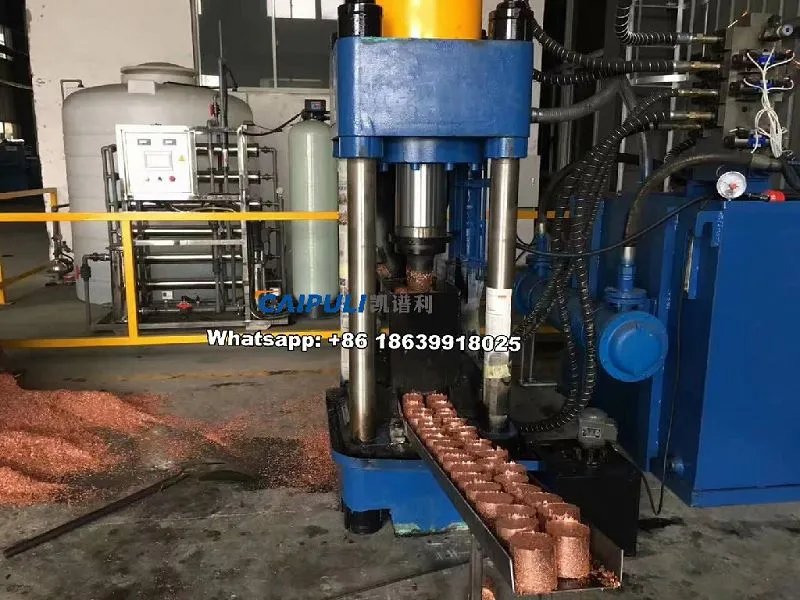
Maximizing Oil Separation & Recovery
The primary purpose of a metal briquetting machine for sale is as much about fluid recovery as it is about scrap consolidation.
High Pressure = Dryer Briquettes
The immense pressure (often 10,000+ PSI) literally squeezes the cutting fluid/oil out of the metal matrix. The quality of this squeeze determines dryness.
Proper Drainage
Ensure the machine's drainage channels and collection tray are clean and unobstructed. Collected fluid should be filtered and routed back to your coolant system or a holding tank for reclamation.
Process Chips Promptly
Don't let chips sit and oxidize. Fresh chips with free-flowing coolant separate more easily than old, crusty ones.
Verify Briquette Dryness
Periodically break open a cooled briquette. The core should be dry to the touch. If it's wet or oily inside, review your pressure settings, dwell time, and material prep.
| Symptom | Likely Cause | Solution |
|---|---|---|
| Briquettes fall apart | Insufficient pressure; Long, stringy chips; Worn dies. | Increase pressure; Pre-crush chips; Inspect/replace dies. |
| Briquettes have low weight | Low density; Incorrect material mix. | Optimize prep & pressure; Keep metals segregated. |
| Excess oil in briquettes | Pressure too low; Dwell time too short; Drain clogged. | Increase pressure/cycle time; Clean all drainage paths. |
| Machine struggles/stalls | Overfilled hopper; Extreme contamination (tools, solids). | Feed consistently; Install a magnetic separator pre-hopper. |
Checklist 01
Pre-process long turnings with a crusher.
Checklist 02
Separate different metal types (steel, aluminum, brass).
Checklist 03
Verify hydraulic pressure and cycle time settings per manual.
Checklist 04
Inspect and clean drainage system daily.
FEATURE 05
Monitor briquette weight and dryness weekly as a KPI.
Checklist 06
Schedule regular maintenance for seals, filters, and dies.


