

As a trusted provider of Q43 - 200 Scrap Metal Shears, I am delighted to take you on an in - depth exploration of the braking system within this remarkable piece of equipment.
1. Introduction to the Q43 - 200 Scrap Metal Shear
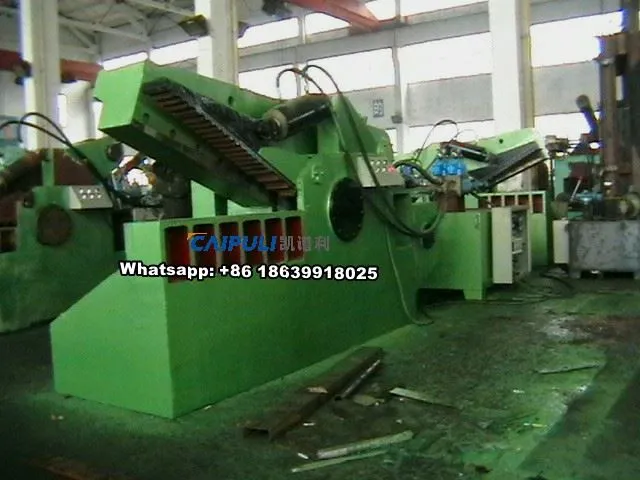
The Q43 - 200 Scrap Metal Shear is a high - performance machine designed for heavy - duty metal recycling operations. It's built to efficiently cut through various types of scrap metals, such as steel bars, pipes, and sheets. This shear is known for its reliability, power, and precision, which are attributed in part to its advanced braking system.
2. Importance of the Braking System in the Q43 - 200
In the world of scrap metal shearing, safety and precision are paramount. The braking system of the Q43 - 200 Scrap Metal Shear plays a crucial role in ensuring both. When the cutting process is complete, the shear blade needs to stop immediately and precisely in a controlled manner. This not only prevents any over - travel damage to the machine and the workpieces but also protects the operators from potential hazards.
3. Components of the Braking System
3.1 Hydraulic Brake
The primary braking mechanism in the Q43 - 200 Scrap Metal Shear is the hydraulic brake. Hydraulic brakes are favored because of their high - torque capacity and smooth operation. They work based on the principle of Pascal's law, which states that pressure applied to a confined fluid is transmitted equally in all directions.
In the Q43 - 200, the hydraulic brake consists of a master cylinder, brake lines, and a brake caliper. When the operator initiates the braking process, hydraulic fluid is forced from the master cylinder through the brake lines to the brake caliper. The caliper then clamps down on the rotating components, such as the drive shaft or the flywheel, creating friction and bringing the movement to a halt.
The advantage of a hydraulic brake system is its ability to generate a large amount of braking force with relatively little input from the operator. This is especially important in heavy - duty applications like scrap metal shearing, where the forces involved in the cutting process are substantial.
3.2 Mechanical Components for Braking
In addition to the hydraulic brake, there are several mechanical components that assist in the braking process. One such component is the brake pad. These are made from high - friction materials that are designed to withstand the intense heat and wear generated during braking. The brake pads are mounted inside the brake caliper, and when the caliper clamps, the pads come into contact with the rotating surface, providing the necessary frictional force.
Another important mechanical part is the brake disc or drum. In the Q43 - 200, depending on the specific design, either a disc or a drum is used. A brake disc is a flat, circular metal plate that is attached to the rotating component. The brake pad clamps onto the disc to create friction. A brake drum, on the other hand, is a cylindrical - shaped component. The brake shoes inside the drum expand outward to create friction against the inner surface of the drum.
4. Operation of the Braking System
4.1 Automatic Braking
The Q43 - 200 is equipped with an automatic braking feature. Once the shearing operation is completed, a signal is sent to the braking system to engage. This ensures that the shear blade stops quickly and reliably, regardless of the operator's input at that moment. The automatic braking system is integrated with the machine's control system, which continuously monitors the status of the shearing process.
4.2 Manual Braking
In addition to the automatic braking, there is also a manual braking option. This is useful in situations where the operator needs to stop the machine immediately due to an emergency or to make adjustments. The manual braking mechanism is typically operated by a lever or a pedal located within easy reach of the operator's position.
5. Maintenance of the Braking System
Proper maintenance of the braking system is essential for the safe and efficient operation of the Q43 - 200 Scrap Metal Shear.

5.1 Regular Inspections
It is recommended to conduct regular visual inspections of the braking components. Check for signs of wear on the brake pads, such as thinning or cracking. Also, inspect the hydraulic lines for any leaks or damage. If any issues are found during the inspection, they should be addressed immediately.
5.2 Fluid Replacement
The hydraulic fluid in the braking system needs to be replaced at regular intervals. Over time, the fluid can become contaminated with dirt, debris, and moisture, which can reduce its effectiveness. Refer to the machine's manual for the recommended fluid type and replacement schedule.
5.3 Adjustment and Calibration
Periodically, the braking system may need to be adjusted and calibrated. This ensures that the braking force is evenly distributed and that the machine stops in the correct position. Professional technicians with experience in scrap metal shear maintenance should perform these tasks.
6. Comparison with Similar Models
We also offer other models in our scrap metal shear range, such as the Q43 - 63 Mobile Hydraulic Metal Shear, Q43 - 250 Scrap Metal Shear, and Q43 - 100 Hydraulic Scrap Metal Shear. Each model has its own unique braking system designed to meet the specific requirements of its size and application.
The Q43 - 200's braking system is a balance between power and precision, making it suitable for medium - to large - scale scrap metal recycling operations. The Q43 - 63, being a more mobile and compact model, may have a more lightweight but still efficient braking system. The Q43 - 250, which is designed for even heavier - duty applications, has a more robust braking system to handle the increased forces.
7. Conclusion
The braking system of the Q43 - 200 Scrap Metal Shear is a complex and well - engineered component that ensures the safety, precision, and efficiency of the machine. Through a combination of hydraulic and mechanical elements, it provides reliable stopping power in all operational conditions.
If you are in the market for a high - quality scrap metal shear, our Q43 - 200 model with its advanced braking system is an excellent choice. We invite you to contact us to learn more about our products and discuss your specific requirements. Our team of experts is ready to assist you in finding the perfect solution for your scrap metal recycling needs.
References
- Manufacturer's manual for the Q43 - 200 Scrap Metal Shear
- "Hydraulic Systems in Industrial Machinery" by John Smith
- "Mechanical Braking Principles and Applications" by David Brown


